
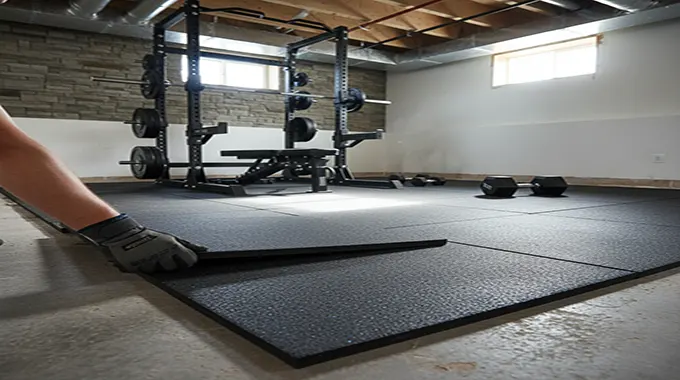
Transforming your basement into a home gym is an excellent investment, but the foundation of that space—the floor—is paramount. Basements, often featuring hard concrete and sometimes dealing with moisture, require a specific flooring solution that offers protection, stability, and sound absorption.
Heavy-duty interlocking rubber tiles are the gold standard for home gym basements. They provide the resilience of commercial gym flooring with the convenience of a DIY, no-adhesive installation, making them the superior choice over thin foam mats or permanent rolls.
Why Interlocking Rubber Tiles are Ideal for Basements
- Impact Protection: Unlike standard basement flooring (concrete or vinyl), thick rubber tiles absorb the shock from dropped dumbbells and kettlebells, protecting your subfloor from cracking and preventing damage to your expensive equipment.
- Moisture & Mildew Resistance: Quality rubber tiles, often made from recycled SBR tire rubber, are non-porous and water-resistant. This is crucial in basements where moisture and humidity can be a constant concern, preventing mold and mildew growth beneath the surface.
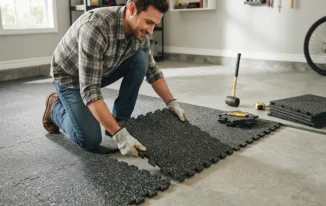
- Easy, Tool-Free Installation: Interlocking tiles fit together like large puzzle pieces. This loose-lay installation is perfect for basements because it allows the floor to “breathe” slightly, accommodating minor shifts or moisture fluctuations without needing permanent adhesives. You can also easily pull up a single tile to clean or inspect the subfloor.
- Noise and Vibration Reduction: The density of rubber is exceptional at deadening sound, significantly reducing the impact noise that travels to the floors above—a major concern in multi-story homes.
Choosing the Right Thickness (It Depends on Your Workout)
The “heavy-duty” aspect is primarily determined by the tile’s thickness. Your choice should directly align with your primary workout style:
| Thickness Range | Workout Focus | Protection Level |
| 8 mm (~5/16″) | General Cardio, Yoga, Light Dumbbells (<50 lbs), Machines. | Standard all-around protection and comfort. |
| 3/8″ to 1/2″ | Heavy Strength Training, Kettlebells, Power Cages, Occasional Drops. | Excellent durability and better noise reduction. Recommended Minimum. |
| 3/4″ to 1″ | Olympic Lifting, Frequent Barbell Drops, CrossFit Style Workouts. | Maximum shock absorption and subfloor protection. |
For most home gym users incorporating mixed strength and cardio, a minimum of 3/8″ or 8mm thickness is recommended. If you plan to drop heavy barbells from hip height or higher, invest in 1/2″ to 3/4″ tiles, especially in the drop zones.
Key Features to Look For
- Material: Opt for tiles made from high-density, recycled vulcanized rubber for maximum durability and low-odor performance (though a slight “new rubber” smell is common initially).
- Edge Design: Ensure the tiles come with finished corner and border pieces for a clean, professional, wall-to-wall look that prevents tripping hazards.
- Tile Size: Most interlocking tiles are 24″ x 24″ (4 square feet), balancing manageable weight with efficient coverage.
By investing in high-quality interlocking rubber tiles, you create a dedicated, professional-grade training environment that protects both your body and your home.