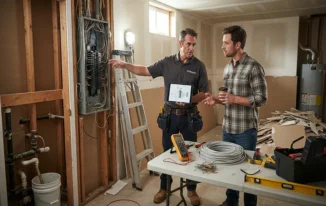

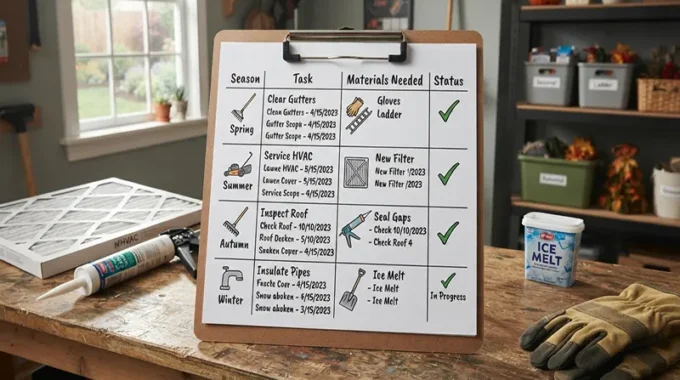
The most financially damaging mistake a property owner can make is adopting a purely reactive approach to home maintenance. Waiting for a pipe to freeze, a roof to leak, or a furnace to fail during the dead of winter guarantees inflated emergency repair bills and premature wear and tear. Shifting from reactive firefighting to a proactive, seasonal maintenance schedule is the single greatest defense against costly property degradation. By treating home care as a structured, year-round cycle rather than a series of sporadic chores, you protect your asset value, ensure family safety, and extend the lifespan of your home’s most critical systems.
1. Spring Rejuvenation and Exterior Recovery
As winter thaws and spring arrives, your property requires a thorough exterior assessment to reverse cold-weather damage and prepare for the moisture and heat ahead.
- Roof and Gutter Inspection: Safely inspect your roof from a ladder or using binoculars to check for missing, cracked, or curling shingles damaged by ice dams and winter winds. Clear winter debris from gutters and downspouts to ensure melting snow and spring rains flow away from your foundation.
- Grading and Drainage: Walk the perimeter of your home during a heavy rainstorm. Check that soil grading slopes away from the foundation and that downspout extensions discharge water at least four to six feet away from exterior walls to prevent basement water infiltration.
- Irrigation and HVAC Startup: Test your lawn sprinkler system for broken heads or leaking underground lines before regular scheduling begins. Simultaneously, switch on your central air conditioning unit early in the season to verify proper cooling performance before peak summer heat arrives.
2. Summer Preservation and Energy Efficiency
Mid-year maintenance shifts toward preserving exterior building materials and optimizing energy efficiency to combat soaring summer utility costs.
- Sealing Windows and Doors: Inspect the weather stripping and caulking around all exterior doors and windows. Worn-out seals allow conditioned air to escape, forcing your HVAC system to work overtime and driving up monthly electric bills.
- Exterior Wood Care and Power Washing: Power-wash accumulated dirt, pollen, and mold from your siding, walkways, and patio surfaces. Inspect wooden decks and fences; if water droplets soak into the wood rather than beading on top, apply a fresh coat of penetrating exterior wood sealer or stain to protect against UV rot.
- Appliance Maintenance: Pull out your refrigerator and vacuum out the dust and pet hair clogging the condenser coils underneath or behind the unit, which improves operating efficiency and extends compressor life.
3. Autumn Weatherproofing and Winter Readiness
Autumn is the most critical window for preventative maintenance. Preparing your home for freezing temperatures and heavy precipitation safeguards your plumbing, heating, and structural integrity.
- Outdoor Water Shutdown: Disconnect, drain, and store all garden hoses. Locate your interior shut-off valves for exterior hose bibs, turn them off, and open the outdoor spigots to drain any residual water so the pipes will not burst when sub-zero temperatures hit.
- Post-Leaf-Fall Gutter Cleaning: Clean gutters a second time after deciduous trees have dropped all of their autumn leaves. Clogged gutters combined with freezing rain create ice dams that tear gutters away from fascia boards and force water back under roof shingles.
- Heating System Tune-Up: Schedule an annual professional HVAC tune-up before you switch on your furnace. A certified technician will inspect heat exchangers, test carbon monoxide levels, clean burners, and replace disposable air filters. Additionally, have your fireplace chimney and flue inspected and swept if you burn wood regularly.
4. Winter Indoor Monitoring and System Health
While exterior tasks wind down in the winter, interior monitoring becomes paramount to maintain system health and indoor air quality.
- Life Safety Devices: Test all smoke detectors and carbon monoxide detectors, replacing backup batteries twice a year. Winter is peak season for heating-related fires and accidental gas leaks, making functional alarms non-negotiable.
- Inspecting Vulnerable Plumbing: Monitor plumbing pipes located in unheated crawlspaces, exterior garage walls, or basement rims. Wrap exposed pipes in foam insulation sleeves, and leave cabinet doors beneath sinks slightly ajar during severe deep freezes to allow warm interior air to circulate.
- Ceiling Fans and Touch-Ups: Reverse the rotation of your ceiling fans to spin clockwise at a low speed, which gently pushes warm air trapped at the ceiling back down into living spaces. Use the quieter winter months to tackle minor indoor cosmetic touch-ups like spackling wall dings or tightening loose cabinet hinges.
The Year-Round Maintenance Routine
Maintaining a resilient, safe, and high-value home does not require endless anxiety; it requires disciplined consistency. By breaking property management down into four distinct seasonal phases, you transform overwhelming upkeep into a predictable, manageable routine. Embracing this preventative mindset ensures that your home remains a secure, comfortable sanctuary year after year while safeguarding your long-term financial investment.