
Transforming a cramped urban yard into a lush garden doesn’t require a large budget or extensive space. With a little creativity, you can turn everyday discarded items into charming, functional planters and garden features. Repurposing materials is not only cost-effective but also adds unique character and a sustainable touch to your small garden.
The key to successful DIY repurposing is seeing the potential in items often overlooked and ensuring they provide adequate drainage for healthy plant growth.
Top 3 Creative DIY Repurposing Ideas for Small Urban Yards
These ideas maximize space, add visual interest, and keep materials out of landfills.
1. Vertical Pallet Gardens (Wall-Mounted or Freestanding)
- The Material: Wooden shipping pallets are abundant and often free. They are surprisingly sturdy and easily transform into multi-tiered vertical planters.
- How To:
- Prep: Crucially, look for the ‘HT’ stamp on the pallet, which means it was Heat Treated (kiln dried), not chemically treated (avoid ‘MB’ stamp). Clean and sand any rough edges.
- Conversion: Flip the pallet so the bottom slats create natural “pockets.” Line the back and bottom of these pockets with landscape fabric or thin plywood to hold the soil in place. Secure the fabric with a staple gun.
- Placement: Lean against a wall or secure it directly to a fence/wall. Fill with good quality potting soil (garden soil is too heavy).
- Best For: Herbs (basil, thyme, parsley), strawberries, and shallow-rooted flowers like petunias or pansies.
2. Tire Planters (Stacked or Sculpted)
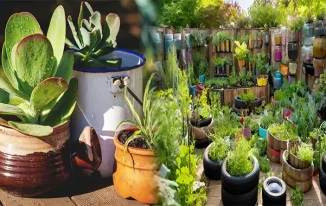
- The Material: Old car tires, often available for free from auto shops.
- How To:
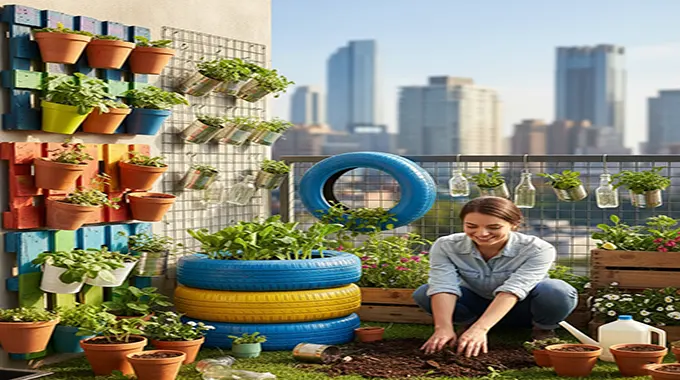
- Prep: Wash tires thoroughly. Drill several large drainage holes in the bottom. For a more decorative look, tires can be painted vibrant colors.
- Stacked Planters: Stack 2-3 tires and screw them together to create secure raised beds. Filling the bottom two-thirds of the stack with inexpensive mulch or fill dirt saves money.
- Safety Note: If you are concerned about chemical leaching, always use a liner (like a fabric pot or heavy-duty plastic liner) inside the tire before adding soil for edible plants.
- Best For: Tomatoes, peppers, potatoes (in stacked tires), or colorful flowers that appreciate warm soil.
3. Tin Can & Jar Herb Gardens (Hanging or Tiered)
- The Material: Various sized tin cans (coffee cans, soup cans) and glass jars (mason jars, pickle jars).
- How To:
- Prep: Clean cans/jars thoroughly. For cans, drill 3-4 small drainage holes in the bottom.
- Hanging Garden: Paint cans/jars. Attach them to a sturdy wooden board or another pallet using pipe clamps or heavy-duty wire/twine. Hang the board on a wall or fence to save floor space.
- Tiered Display: Use an old wooden ladder or pallet slats to create tiers where the cans/jars can be placed or clipped.
- Best For: Individual herbs (chives, cilantro), small succulents, or starting seedlings.
Tips for Repurposed Garden Success
- Drainage is King: Regardless of the material, ensure ample drainage holes. Waterlogged roots will quickly kill your plants.
- Safety First: When cutting or drilling, especially metal or hard plastic, always wear appropriate safety gear (gloves, eye protection).