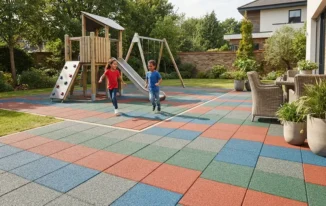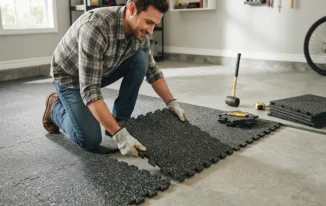

Rubber floor tiles are celebrated throughout the commercial fitness and residential gym industries for their incredible durability, shock absorption, and slip-resistant safety. However, a common misconception among facility managers and homeowners is that “durable” translates to “indestructible.” While rubber can withstand dropped barbells and heavy foot traffic, ignoring routine maintenance exposes the material to premature degradation, trapped bacteria, and aesthetic dullness. Establishing a structured, chemically correct cleaning and maintenance protocol protects your financial investment and ensures a hygienic, professional environment for years to come.
1. Daily and Weekly Preventative Maintenance Protocols
The foundation of any successful rubber floor maintenance program begins before dirt ever settles into the porous matrix of the tiles. Abrasive grit is the silent enemy of high-performance rubber.
- Combating Abrasive Grit: Dirt, sand, and small stones act like microscopic sandpaper under athletic shoes and equipment. Daily sweeping with a soft-bristle push broom or dry-mopping with a microfiber dust mop removes loose debris before it can grind into the surface. In high-traffic commercial facilities, regular vacuuming with a commercial-grade vacuum (without a harsh rotating beater brush) is highly effective.
- The Power of Walk-Off Mats: Install high-quality scraper and absorption mats at all facility entrances. Stopping outdoor moisture, salt, and dirt at the door drastically reduces the volume of abrasive particles entering your rubber-surfaced workout areas.
2. Correct Chemical Selection and pH-Neutral Cleaning
Understanding the chemical composition of your rubber flooring is critical. Using the wrong cleaning agent can permanently ruin your investment within a single application.
- Avoiding Harsh Solvents and Petroleum: Never use petroleum-based solvents, turpentine, pine oil, harsh bleach, or oil-based furniture polishes on rubber tiles. These harsh chemicals break down the chemical binders holding the rubber granules together, causing the tiles to swell, soften, curl at the edges, and discolor permanently.
- The Necessity of pH-Neutral Cleaners: Always use a specialized, water-based, pH-neutral cleaner specifically formulated for vulcanized and recycled rubber flooring. These cleaners lift sweat, body oils, and grime safely without stripping the rubber’s protective finish or compromising its anti-slip traction.
3. Deep Cleaning, Scrubbing, and Auto-Scrubber Techniques
Routine mopping is essential, but high-traffic commercial spaces require periodic deep cleaning to extract embedded perspiration and deep-seated grime.
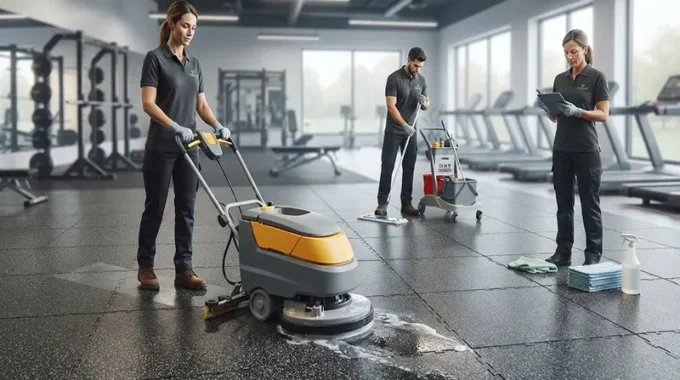
- Rotary Buffer Techniques: For thorough deep cleaning, equip a low-speed rotary floor buffer with a soft nylon scrubbing brush or a non-abrasive cleaning pad. Avoid aggressive stripping pads, which can gouge or texture the rubber surface unfavorably.
- Auto-Scrubber Efficiency: In large commercial gym settings, walk-behind automatic floor scrubbers dispense the pH-neutral cleaning solution, agitate the surface with soft brushes, and immediately vacuum up the dirty slurry in a single pass. This prevents excess water pooling, which can seep into tile seams and compromise the adhesive sub-base.
4. Addressing Scuffs, Spills, and Spot Stain Removal
Accidents happen, whether it is spilled sports drinks, chalk dust, or black scuff marks left by heavy equipment or athletic footwear.
- Tackling Sticky Spills and Sweat: Clean liquid spills immediately using a damp microfiber mop or cloth saturated with a mild, pH-neutral detergent solution. Allowing sugary sports drinks or sweat to dry on the floor creates sticky residues that attract more dirt and foster bacterial growth.
- Removing Tough Scuff Marks: Black rubber scuffs from shoe soles can be gently buffed out using a soft-bristled nylon brush and a diluted, pH-neutral cleaning solution. Avoid harsh metal scrapers or steel wool, which tear the rubber surface and leave permanent scars.
The Long-Term Maintenance Schedule
Consistent, gentle maintenance yields decades of peak performance and pristine appearance from your rubber flooring. By adhering to a disciplined schedule—daily sweeping, weekly pH-neutral damp mopping, and periodic deep scrubbing—you safeguard your facility against premature wear and tear. A well-maintained rubber floor not only enhances the professional aesthetic of your gym or patio but also ensures a safe, hygienic, and resilient foundation for every workout.